What to Do Before Your Hairstyling Appointment (So It Actually Turns Out Well)
Most disappointing hair results trace back to what happened, or didn't happen, before the stylist even touched the hair. Here's what actually matters.
A lot of people blame the stylist when a style doesn't turn out right, and sometimes that's fair. But just as often, the real issue started at home, days before the appointment, in the form of hair that showed up dirty, tangled, or dry to a chair that was never going to have time to fix all of that and still deliver a clean install.
Prep isn't glamorous and it rarely gets mentioned in before-and-after photos, but it's usually the difference between a style that looks good on day one and falls apart by week two, and one that actually holds.
H2: Wash and deep condition a few days ahead, not the night before
Freshly washed hair is easier to work with, but washing it the same day or night before an early appointment often means you're showing up with hair that's still slightly damp or hasn't settled. Two to three days ahead is usually a better window. It gives your scalp and strands time to normalise while your hair is still clean enough to style comfortably.
Deep conditioning matters here too, especially if you're heading into a protective style that will stay in for several weeks. Hair that goes into a style already dry and brittle doesn't get healthier just because it's tucked away.
H2: Detangle before you go, not at the appointment
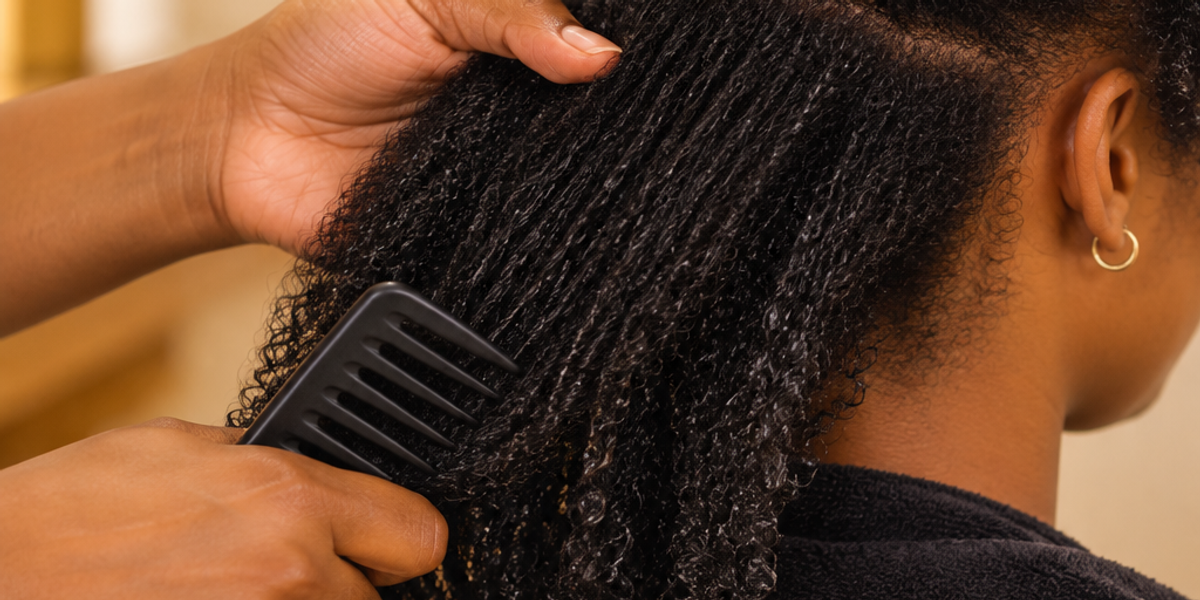
Nothing eats into an appointment faster than a stylist spending the first forty minutes detangling hair that was never combed through at home. Beyond the time cost, detangling under time pressure at the salon often means more tension and more breakage than if it had been done slowly, in sections, at home.
Detangle from the ends upward, in small sections, with a conditioner or detangling spray if your hair tends to knot easily. You don't need it perfectly smooth, just free of major knots and shed hair.
H2: Moisturise your scalp, especially if you're going into a protective style
This is the step people skip most often, and it's often why itching starts two weeks into a new style. A well moisturised scalp going in tends to stay more comfortable throughout the style's wear time.
If your appointment is for something like braids, twists, or a wig install, this matters even more, since you won't have easy access to your scalp for weeks afterward. We've gone deeper into what actually makes a style protective versus just tucked away in our guide to protective hairstyles that actually protect your hair, which is worth a read before any longer-term style.
H2: Be honest about your hair's current condition
Stylists aren't mind readers. If your edges are thinning, if you've had a reaction to a product before, if a previous style left tension marks, or if your scalp is unusually sensitive right now, say so before anything begins. This isn't oversharing, it's information your stylist actually needs to choose the right tension, sectioning, and technique for your hair specifically, rather than a generic approach.
H2: Know what you want, but stay open to adjustment
Bring reference photos if you have them, but understand that a style that worked on someone else's hair density or texture might need slight changes to work as well on yours. A stylist who suggests an adjustment isn't talking you out of your idea, they're usually trying to protect the result.
This matters even more for high-stakes appointments like a bridal trial, where getting the adjustment conversation right the first time saves you from surprises later. If a wedding is coming up, our guide on choosing bridal hairstyles for Nigerian brides covers how to plan for that properly.
H2: Eat and hydrate before longer appointments
It sounds unrelated to hair, but a full protective style install or a bridal updo trial can take two to four hours, sometimes longer. Showing up hungry or dehydrated doesn't affect the hair, but it affects how well you sit through the process, and that shows in how relaxed you look in the final photos.
H2: Why prep matters even when you're booking a professional
Good prep doesn't replace a skilled stylist, but it lets a skilled stylist actually do their best work instead of spending appointment time fixing things that home prep could have handled. If you're booking your appointment and want a stylist who will also guide you on what to do beforehand rather than leaving you to guess, Zerrar Hairstyling makes it easier to book a hairstyling service with that kind of guidance included.
H2: The bottom line
The appointment is only one part of getting a good result. Wash and condition ahead of time, detangle at home, moisturise your scalp, and be upfront about your hair's condition. Do this consistently, and you'll notice the difference in how your styles look and how long they actually last.
Want your next style to hold up because the groundwork was done right?
Book your hairstyling service through Zerrar Hairstyling:
https://hairstyling.zerrar.com
For enquiries, contact:
[email protected]