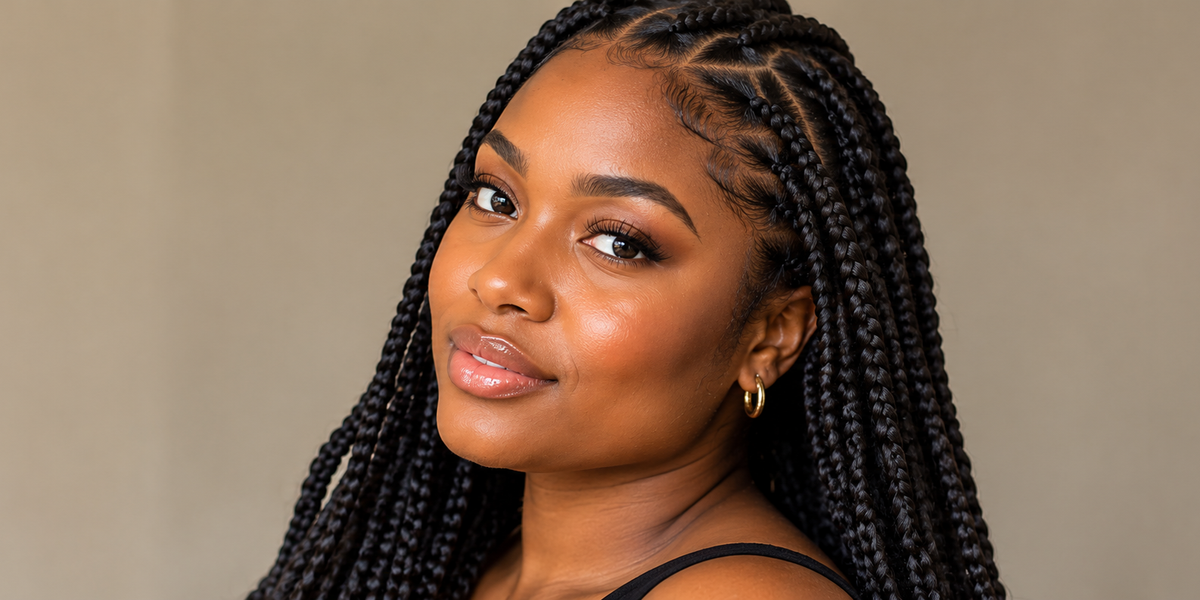
Protective Hairstyles That Actually Protect Your Hair (Not Just Your Time)
Not every style called "protective" is doing your hair any favours. Here's how to tell the difference, and what to look for before you sit in that chair.
Somebody somewhere is currently getting a style installed so tight that by evening she'll already be taking painkillers for it. And she'll still call it a "protective style" when her friends ask what she did to her hair.
That's the problem. The term has been stretched to cover almost anything that isn't a wash-and-go, whether or not it's actually protecting a single strand.
A protective hairstyle only earns that name if it does three things: reduces daily manipulation, keeps your ends tucked away from friction, and doesn't put unnecessary tension on your scalp or edges. If a style fails any of those, it's just a style. It might still look good, but calling it protective is misleading, and it may be quietly working against the growth you're trying to retain.
Why "protective" doesn't mean "install it and forget it"
Hair breaks for reasons that have nothing to do with how often you touch it. Dryness, tight tension, wrong product buildup, and styles left in too long can all undo the point of protective styling in the first place.
This is where a lot of good intentions go wrong. Someone gets braids specifically to "let her hair rest," then leaves them in for twelve weeks without moisturising the scalp, and takes them down to find more shedding than she started with. The style wasn't the problem. The maintenance was.
The three things that actually determine if a style is protective
- Low tension at the root and hairline, especially around the temples
- Ends that are tucked, sealed, or otherwise kept away from constant rubbing against clothing or pillowcases
- A realistic wear time, so the style comes down before matting or excessive buildup sets in
If a stylist can't tell you how their installation method addresses these three things, that's worth asking about before you sit down.
Protective styles worth considering, and what each one actually does
Box braids
Good for length retention when installed with reasonable size and tension. Medium to large braids put less strain on the scalp than very small ones, and they're easier to keep clean underneath.
Cornrows and feed-in styles
A solid choice when you want something neat for a few weeks without added hair weight if you go natural cornrows, or added length if you go feed-in. The risk here is almost always tension at the hairline, so this is a style where the stylist's hand really matters.
Twists, both two-strand and Senegalese
Gentler on the scalp than most braided styles and a good middle ground if you want your natural texture protected without committing to something heavier.
Wigs and closures over cornrowed hair
When installed correctly, this can be one of the lowest-manipulation options available, since your natural hair underneath is left almost entirely alone for weeks. The catch is that "installed correctly" is doing a lot of work in that sentence. A rushed or overly tight cornrow base underneath a wig causes exactly the kind of edge damage the style was supposed to prevent.
Buns and low-manipulation updos
Not glamorous, but genuinely effective for short stretches when you need your hair out of the way without committing to a multi-hour install.
How long to actually keep a protective style in
There's no single universal number, but a useful range for most braided or twisted styles is four to eight weeks. Beyond that, new growth at the root tends to tangle with the install, making takedown harder and increasing breakage.
If your scalp is itching persistently, if you notice unusual shedding around the perimeter, or if the style has started to loosen and frizz heavily at the roots, that's your hair telling you it's time, regardless of how many weeks are left on your calendar.
What to check before you sit in the chair
A good protective style starts before the first braid or twist goes in.
- Ask how your hair will be prepped. Clean, moisturised, detangled hair holds up far better under any style than hair that was styled dirty to save time.
- Ask about tension, specifically. A stylist who takes this seriously won't be offended by the question.
- Be honest about your hair's current state. If your edges are already thinning or your scalp is sensitive, say so before the comb touches your head, not after.
- Have a realistic takedown date in mind, and put it somewhere you'll actually see it.
When it makes sense to book a professional instead of doing it yourself
DIY protective styling works for plenty of people, especially for simple styles like twists or buns. But a lot of hair damage attributed to "protective styles going wrong" actually comes down to technique: uneven tension, hair sectioned too small, or a base that was never properly prepped.
If you would rather leave the styling to someone who does this daily and can adjust technique to your actual hair rather than a generic method, Zerrar Hairstyling makes it easier to book a hairstyling service without the back and forth of chasing a stylist on WhatsApp for availability.
The bottom line
A protective style is only protective if it's actually reducing stress on your hair, not just hiding it under braids or a wig for a few weeks. Pay attention to tension, prep, and how long you're wearing a style, and the term will start meaning something again, rather than being a label people put on any style that isn't loose.
Ready to get your hair styled by someone who'll actually pay attention to tension and prep, not just speed?
Book your hairstyling service through Zerrar Hairstyling:
https://hairstyling.zerrar.com
For enquiries, contact:
+2347048818270
Featured in this article
Zerrar Hairstyling Salon
Zerrar Hairstyling handles tension, prep and takedown properly, the details most DIY installs and rushed salon visits skip.