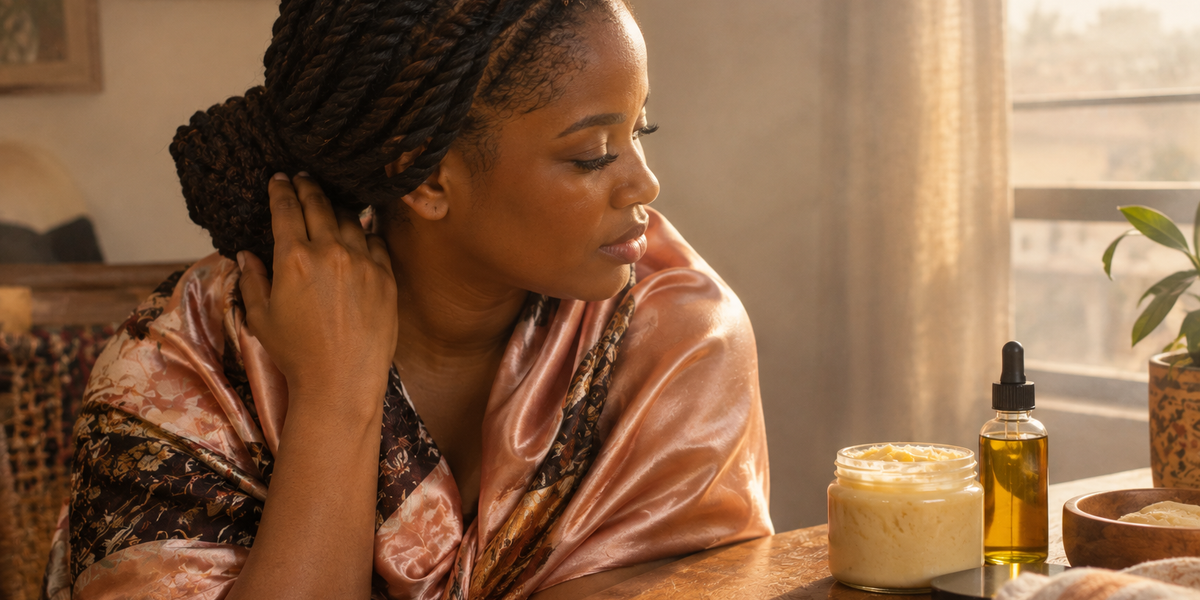
Harmattan Hair Care: How to Protect Your Hair Through the Dry Season
Harmattan dries out hair and scalp faster than most people expect. Here is a simple routine, and the styles that cope best with the season.
Around the time the mornings turn hazy and your lips start cracking, your hair usually starts complaining too. It feels rougher, it tangles faster, and the scalp gets itchy for no obvious reason. That is harmattan doing what it does every year, and it catches a lot of people out because the change happens gradually.
The dry, dusty air pulls moisture from your skin and your hair. Hair that felt fine in the rainy season can start to feel brittle within a couple of weeks, and if nothing changes in your routine, breakage tends to follow. The good news is that a few consistent habits go a long way.
This is general beauty advice, not medical advice. If your scalp is painful, very flaky or inflamed, that is worth showing to a doctor or a trained specialist rather than treating at home.
H2: Why harmattan is hard on African hair
Harmattan season usually runs from around late November into March, and it brings dry air and fine dust. Both matter for your hair.
Dry air means moisture leaves your hair quickly. Textured hair already has a harder time distributing natural oils along the strand, so it tends to feel the dryness sooner. Dust adds to the problem, because it settles on the scalp and hair, mixes with product and can leave everything feeling coated and uncomfortable.
The result is hair that feels dry, tangles easily and snaps when handled roughly.
H2: Moisture first, then seal it in
The simplest routine has two steps, and the order matters.
- Apply water or a water-based leave-in conditioner to damp hair or a lightly misted section. This is what actually adds moisture.
- Follow with a light oil or butter, such as shea butter, to hold that moisture in.
If you only apply oil to dry hair, you are sealing in dryness. If you only use water and skip the sealing step, the moisture evaporates quickly in harmattan air. You need both, and most people find they need to repeat the routine more often than usual during this season, sometimes every day or every other day depending on the hair.
H2: Do not neglect the scalp
Scalp dryness is one of the biggest complaints of the season, and it is especially easy to ignore when your hair is in braids or a wig.
- Apply a light oil or scalp moisturiser to the scalp every few days
- Use a diluted shampoo or an applicator bottle to cleanse the scalp during a protective style, so dust and buildup do not sit there for weeks
- Avoid heavy, thick products on the scalp, since they can attract more dust and cause buildup
We cover how to clean and moisturise the scalp without disturbing a style in our guide on making your hairstyle last longer.
H2: Protective styles help, but only if you look after them
Tucking your hair away reduces the exposure to dry air and cuts down on daily handling, which is why many people choose braids, twists or cornrows for this season. It genuinely helps.
But a protective style that is left dry for six weeks can leave you with worse hair at takedown than you started with. Harmattan makes that risk higher. If you plan to wear a style through the dry season, moisturise the hair and scalp regularly, keep your ends protected and keep a realistic wear time in mind. Our guide to protective hairstyles that actually protect your hair explains what to look for, including tension and how long is too long.
H2: Wash and deep condition on a steady schedule
You do not need to wash more often in harmattan, but you do need to condition properly. A deep conditioning treatment every one to two weeks helps hair stay soft and manageable through the dry months. After washing, follow the same moisturise-then-seal routine while the hair is still damp.
If you are between styles, a proper wash and conditioning session before your next install is worth the effort. It gives your stylist better hair to work with, as we explain in preparing your hair before a styling appointment.
H2: Protect your hair at night and outdoors
- Wrap your hair in satin or silk at night, or sleep on a satin pillowcase, since cotton pulls moisture from the hair
- Wear a loose satin-lined scarf or cap when you are out in dusty conditions, especially on long road trips
- Keep your hair covered while travelling on open roads or motorbikes, and rinse or wipe dust off the scalp when you get home
- Limit heat styling, because heat on dry hair is a fast route to breakage
H2: Hairstyles that tend to cope well with the season
Cornrows and twists
Neat, low manipulation and easy to moisturise between wash days. Just do not leave them in longer than is healthy for your hair.
Buns and low updos
Good for natural hair when you want your ends tucked away and your hair covered, with a moisturising routine underneath.
Wigs and closures
A workable option if the cornrowed base underneath is prepared and cared for properly. Do not forget the scalp under the wig, since it still needs cleaning and moisture.
Loose, heavily styled looks
These are the hardest to keep comfortable in harmattan, because exposed ends dry out fastest. If you want them for a particular occasion, plan extra moisture and protection around it.
If you are unsure which style suits your face and hair, choosing a hairstyle for your face shape is a good place to start.
H2: Choose your style before the season peaks
The weeks just before and during early harmattan are a good time to decide on a style and book it, since hair that goes into the season already clean, conditioned and properly styled tends to cope better. It also helps to book someone you trust, because a rushed install during a busy period is exactly the kind of situation that leads to tension problems. Our guide on how to choose a hairstylist in Lagos covers what to check before you commit.
If you would rather have a professional handle the install so you can focus on the moisture routine, Zerrar Hairstyling makes it easier to book a hairstyling service ahead of the season.
H2: The bottom line
Harmattan is not the enemy of your hair, but it does punish a routine that is not built for it. Moisturise and seal on purpose, look after your scalp, protect your hair at night and outdoors, and choose a style you can maintain through the dry months. Small, consistent habits will do more for your hair than any single product.
BOOKING CTA:
Want your hair styled properly before the dry season sets in?
Book your hairstyling service through Zerrar Hairstyling:
https://hairstyling.zerrar.com
For enquiries, contact:
[email protected]